
How to Source Personalised Calendars for Your Clients in Australia
Discover how to source high-quality personalised calendars for businesses and resellers in Australia, with tips on formats, decoration, and suppliers.

Written by
Nina Zhang
Stationery & Office
Every January, millions of Australian offices, clinics, schools, and tradie vans get a fresh calendar pinned to the wall — and for smart marketers, that’s 365 days of brand visibility sitting right in front of the customer. The personalised calendar remains one of the most enduring and cost-effective promotional tools in the industry, yet sourcing the right product for your clients takes more knowledge than many new resellers expect. Whether you’re managing campaigns for a Sydney real estate agency or coordinating branded merchandise for a Brisbane council, understanding how to navigate the calendar category will help you deliver better results and protect your margins.
Why the Personalised Calendar Still Dominates Promotional Stationery
In an era where digital marketing competes for every second of attention, physical promotional products that earn permanent real estate in someone’s workspace are genuinely valuable. A well-produced personalised calendar does exactly that. It’s functional, it’s visible daily, and it carries your client’s branding without feeling intrusive.
Consider the typical use case: a Melbourne accounting firm sends branded wall calendars to 200 of their top clients every December. Those calendars go up in home offices, kitchens, and reception areas across Victoria. For twelve months, the firm’s logo, contact number, and branding are in plain sight — no click required, no algorithm to beat. The cost per impression over the year works out to a fraction of a cent. Very few promotional products can claim that kind of return.
There’s also the gifting angle. A quality personalised calendar positions the sender as thoughtful and professional. It’s a functional gift that clients actually want, which makes it an ideal complement to other seasonal merchandise. If you’re assembling end-of-year gift packs, pairing a calendar with a custom coaster or branded notebook creates a cohesive, impressive package.
Understanding the Product Range: Formats and Applications
Before you go to market, you need to understand what’s actually available in the personalised calendar category. The range is broader than most resellers initially assume.
Wall Calendars
The classic format. Wall calendars come in a range of sizes — A3, A2, and even A1 for high-impact display — and are typically saddle-stitched or wire-bound. Each page features a month grid alongside a prominent image or brand panel. Wire-O binding (also called twin wire or double-O wire) is particularly popular in the corporate gifting space because it allows pages to lie flat and gives the product a premium feel.
Wall calendars are well-suited to industries where visibility matters: real estate, healthcare, trades, financial services, and automotive. A Cairns plumbing company, for example, might order 500 A3 wall calendars to hand out to their residential clients each December, knowing those calendars will be displayed in kitchens and garages all year.
Desk Calendars
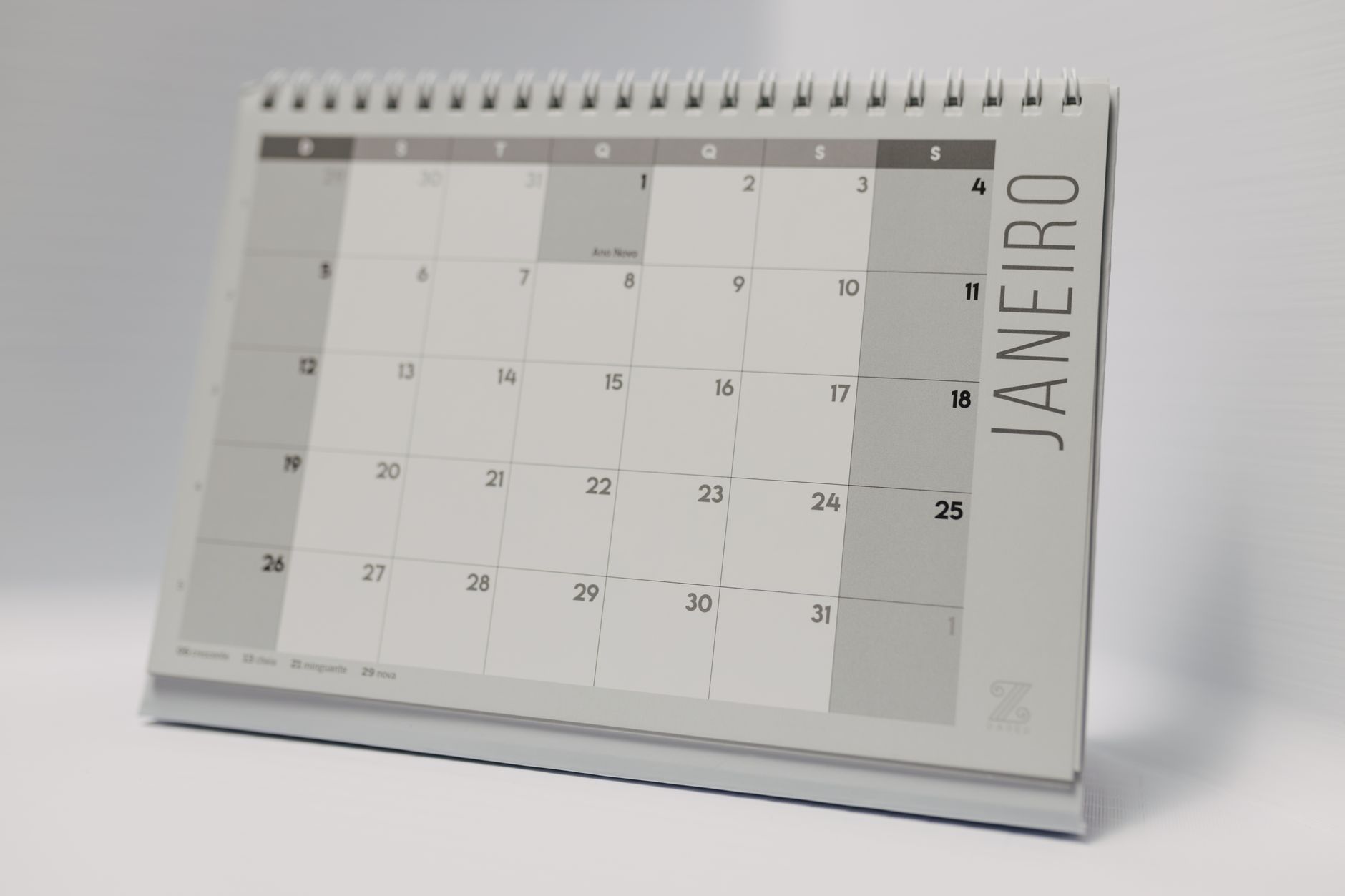
Desk calendars — sometimes called desktop easel calendars or tent calendars — sit on a flat surface and are designed for office environments. They’re ideal for B2B gifting because they land directly on a decision-maker’s desk. Formats include spiral-bound flip calendars, cube calendars, and month-at-a-glance easel styles.
These tend to have lower print runs required compared to large-format wall calendars, making them accessible for clients with smaller budgets or more targeted distribution lists.
Pocket and Diary Formats
Some clients want something more portable. Pocket calendars — small, laminated cards that fold to wallet or purse size — are popular for community organisations, local councils, and health services wanting to share key dates with their audiences. They’re ultra-low cost and work well for mass distribution at events or through letterbox drops.
For a deeper look at the full range of customised calendar formats and how to present options to your clients, our guide to customised calendars covers the category in thorough detail.
Decoration Methods and Artwork Considerations
The decoration approach for personalised calendars is almost entirely print-based, but the quality and method vary significantly across suppliers and print runs.
Offset and Digital Printing
Most calendar suppliers in Australia use either offset or digital printing. For larger runs — typically 500 units or more — offset lithography delivers superior colour accuracy and consistency. It’s the preferred method when PMS colour matching is critical, such as when a client’s brand has strict style guidelines.
Digital printing is well-suited to shorter runs and where personalisation is needed at an individual level — for instance, if each calendar in a run of 50 needs to feature a different property image for a real estate agency. The trade-off is slightly less colour consistency compared to offset, though modern digital presses have significantly narrowed this gap.
Artwork Requirements
Calendar artwork is typically supplied as print-ready PDFs, with each month’s grid and image supplied as separate files or as a single multi-page document. Bleed allowances (typically 3mm on each edge), correct resolution (300 DPI minimum for images), and correct colour mode (CMYK, not RGB) are all standard requirements.
One of the most common delays on calendar projects comes down to artwork. Encourage your clients to start the creative process early — ideally six to eight weeks before their target delivery date. This gives time for proof approval, print production, and delivery without unnecessary rush charges. The customised calendar production guide goes into artwork specs in more depth if you or your clients need a reference point.
Ordering Timelines, MOQs, and Budget Planning
Timing is everything in the calendar category. Personalised calendars have one of the most predictable demand cycles in the promotional products industry, which is both an advantage and a risk.
Minimum Order Quantities
MOQs vary by format and supplier. For wall calendars, expect a minimum of around 100 to 250 units from most Australian suppliers, with significant price breaks at 500 and 1,000 units. Desk calendars and pocket formats can have lower minimums — sometimes as few as 50 units — but the unit economics are less favourable at the low end.
When to Start the Conversation
This is perhaps the most important advice you can give your clients: start early. The window for calendar production effectively closes in October for December delivery, and many popular formats book out well before that. If you’re working with clients who want a branded personalised calendar in hand before Christmas, you should ideally be placing orders by September.
Resellers who lock in early orders also benefit from better pricing, availability of preferred formats, and the ability to offer faster delivery to clients who come in late. It’s worth reaching out to your existing client base in July or August to plant the seed for the upcoming season.
Budget Considerations
Budget ranges widely depending on format, print quality, quantity, and finish. A basic A3 wall calendar at 500 units might sit around $5 to $10 per unit, while a premium wire-bound version with full-colour printing on heavy stock could reach $15 to $25 per unit. Desk calendars typically cost more per unit at lower quantities.
If you’re putting together gift packages for corporate clients, it’s worth considering how the calendar fits with other items. A customised lunch box or a set of branded coasters might complement a calendar nicely at a similar price point, creating a package that feels curated rather than assembled.
Finding the Right Supplier for Personalised Calendars
Not all calendar suppliers are created equal. When evaluating potential suppliers, there are several factors worth examining closely.
Print Quality and Paper Stock
Ask for physical samples before placing a large order. The difference between 100gsm and 150gsm paper stock is significant — heavier stock feels premium and handles imagery better. Check that the supplier can demonstrate consistent colour reproduction across the run, particularly if your client’s brand colours are specific.
Turnaround Times
Standard production for personalised calendars typically runs two to four weeks from proof approval, depending on quantity and complexity. Rush turnarounds are usually available at a premium but aren’t always possible during peak season (October to December). Know your supplier’s lead times before promising delivery dates to clients.
Data Personalisation Capabilities
Some campaigns require individual personalisation — each calendar printed with a recipient’s name, a specific image, or unique content. Not all calendar suppliers offer this, so confirm this capability upfront if your client brief requires it. Digital print-on-demand suppliers are typically better equipped for this than offset-only producers.
Seasonal and Year-Round Applications
While December and January are the obvious windows, personalised calendars have year-round applications worth pitching to clients. A financial year calendar (July to June) is particularly relevant for government departments, schools, and professional services. A Perth law firm or a Canberra government department might prefer a financial year format that aligns with their operational calendar.
If you’re helping clients think about their seasonal gifting strategy more broadly, it’s worth exploring how calendars work alongside other corporate gifts — including personalised Christmas baubles for festive end-of-year packs.
Selling Personalised Calendars as a Reseller
If you’re a reseller or marketing agency adding calendars to your offer, there are a few strategic points worth keeping in mind.
Position calendars as a relationship tool, not just a novelty. Help your clients understand the brand visibility value over a twelve-month period. Use data: if a calendar sits on a desk in a busy office, it might be seen by the primary recipient and several colleagues or visitors every single day. Over a year, that’s significant brand impressions at a very low cost per unit.
Bundle opportunities also exist across the wider stationery and office category. A branded notebook, a quality pen, a desk calendar, and a custom coaster can be packaged as a cohesive corporate welcome kit or client gift set. This increases average order value and positions you as a consultative partner rather than a transactional supplier.
Conclusion: Key Takeaways for Sourcing Personalised Calendars
The personalised calendar is a perennial performer in the promotional products space — functional, high-visibility, and genuinely appreciated by recipients. As a reseller or agency, getting the sourcing process right comes down to timing, supplier knowledge, and helping your clients understand the true value of the format.
Here are the key points to take away:
- Start early — brief suppliers and lock in orders by September for December delivery; popular formats sell out well before peak season.
- Know the formats — wall calendars, desk calendars, and pocket formats each suit different audiences, budgets, and distribution strategies.
- Prioritise print quality — request samples, confirm paper weights, and check colour consistency before committing to a large run.
- Understand MOQs and pricing tiers — most suppliers offer meaningful price breaks at 250, 500, and 1,000 units; plan your client’s quantity accordingly.
- Think beyond December — financial year formats and custom data personalisation open up year-round opportunities for the personalised calendar category.